
Start here
How to start a sealcoating business
7-minute read · Figures checked October 2026
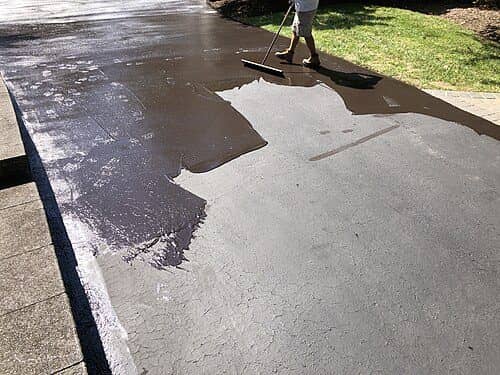
Photo: Famartin / Wikimedia Commons, CC BY-SA 4.0

The short answer
Learn the prep first: sealer goes on clean, crack-filled asphalt that's still sound. Pick one product that's legal where you work, start on driveways and small lots with hand tools or rented equipment, and finish three paid jobs before you buy a rig. Follow the product's label for weather and cure, and keep traffic off until the coat is ready. The money and setup steps are in Business 100: Start Right, and the start hub has the full launch sequence.
What sealcoat does, and what it can't fix
Sealcoat is the black liquid applied to asphalt parking lots, driveways and playgrounds to protect the surface and improve its looks. The U.S. Geological Survey (USGS) says it's sold mainly for parking lots and driveways and is rarely used on public roads.
It's a surface coat. The Federal Highway Administration (FHWA) says preservation work generally doesn't add structural value, so sealer won't hold together pavement that's breaking up. FHWA's crack manual sends badly broken cracks to repair, like patching, and widespread broken cracking to rehabilitation. Recommend the repair or refer it out, and write it on the estimate. If a driveway sealed last year still looks good, say so.
Who buys: homeowners, property managers, homeowners associations (HOAs), churches and small businesses (B100.3). Sell a job at a customer's home for $25 or more, and the Federal Trade Commission's Cooling-Off Rule generally lets the buyer cancel until midnight of the third business day, even if they invited you (B100.6). Sales mainly for business use generally aren't covered.
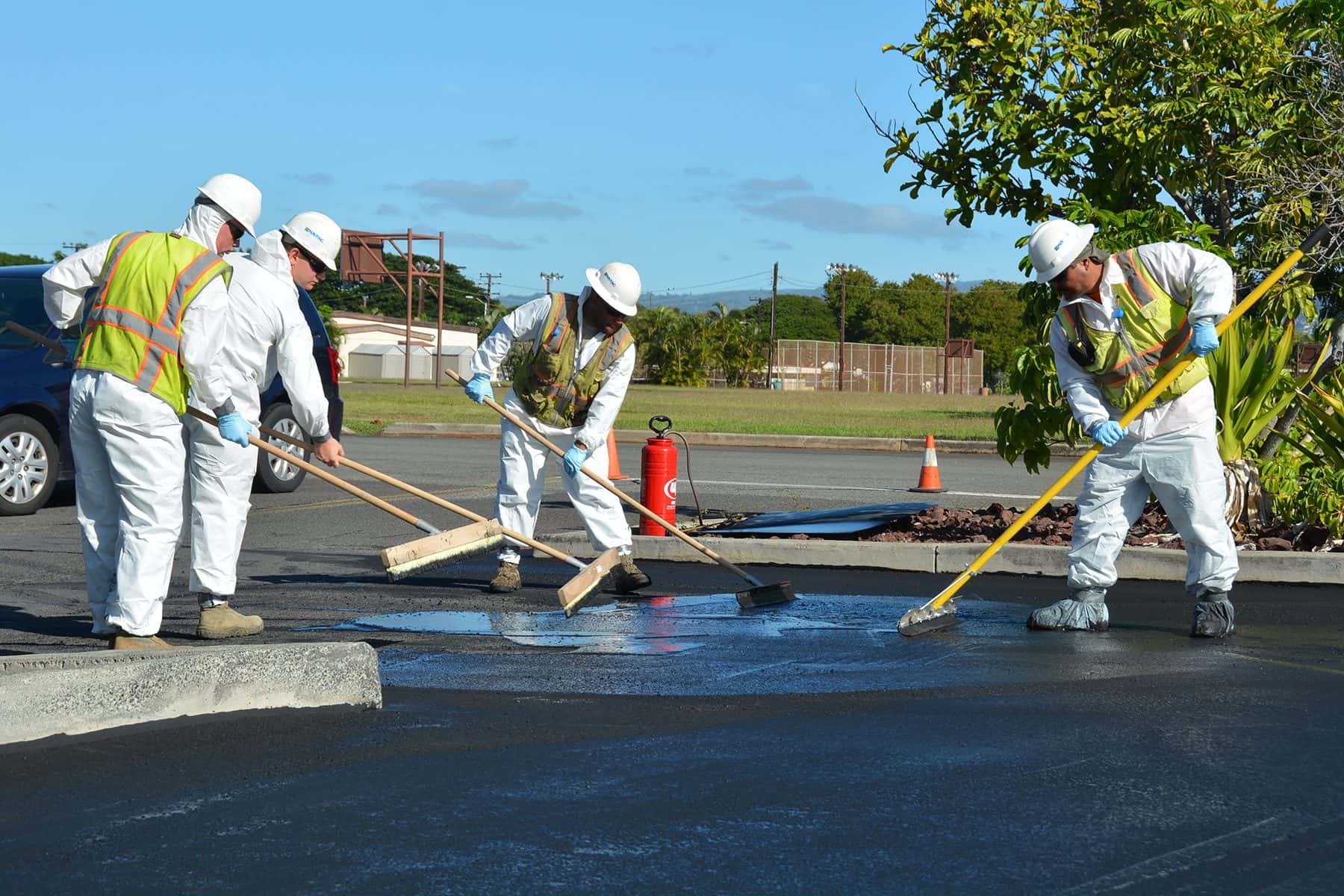
Squeegee application: the crew pulls sealer across the lot by hand, working it into the surface.
Photo: NAVFAC / Wikimedia Commons, CC BY 2.0
.jpg)
Pick your product: asphalt emulsion or coal tar
USGS says most sealcoat products are either coal tar or asphalt emulsion. Coal-tar products contain much higher levels of polycyclic aromatic hydrocarbons (PAHs), and some states and cities restrict them because PAHs wash off into lakes and streams:
- Minnesota bans the sale and use of coal-tar sealers statewide, as of January 1, 2014. Twenty-nine Minnesota cities had their own bans before that.
- Washington bars selling pavement sealer labeled as containing coal tar (after January 1, 2012) and applying coal-tar sealer to a driveway or parking area (after July 1, 2013).
- Some cities have their own bans. Austin, Texas, banned coal-tar sealcoat in 2006.
Where both are legal, the choice is yours and your customer's. Whichever you choose, get its technical data sheet and safety data sheet (SDS), and buy from a supplier who will answer questions about mixing, storage and equipment.
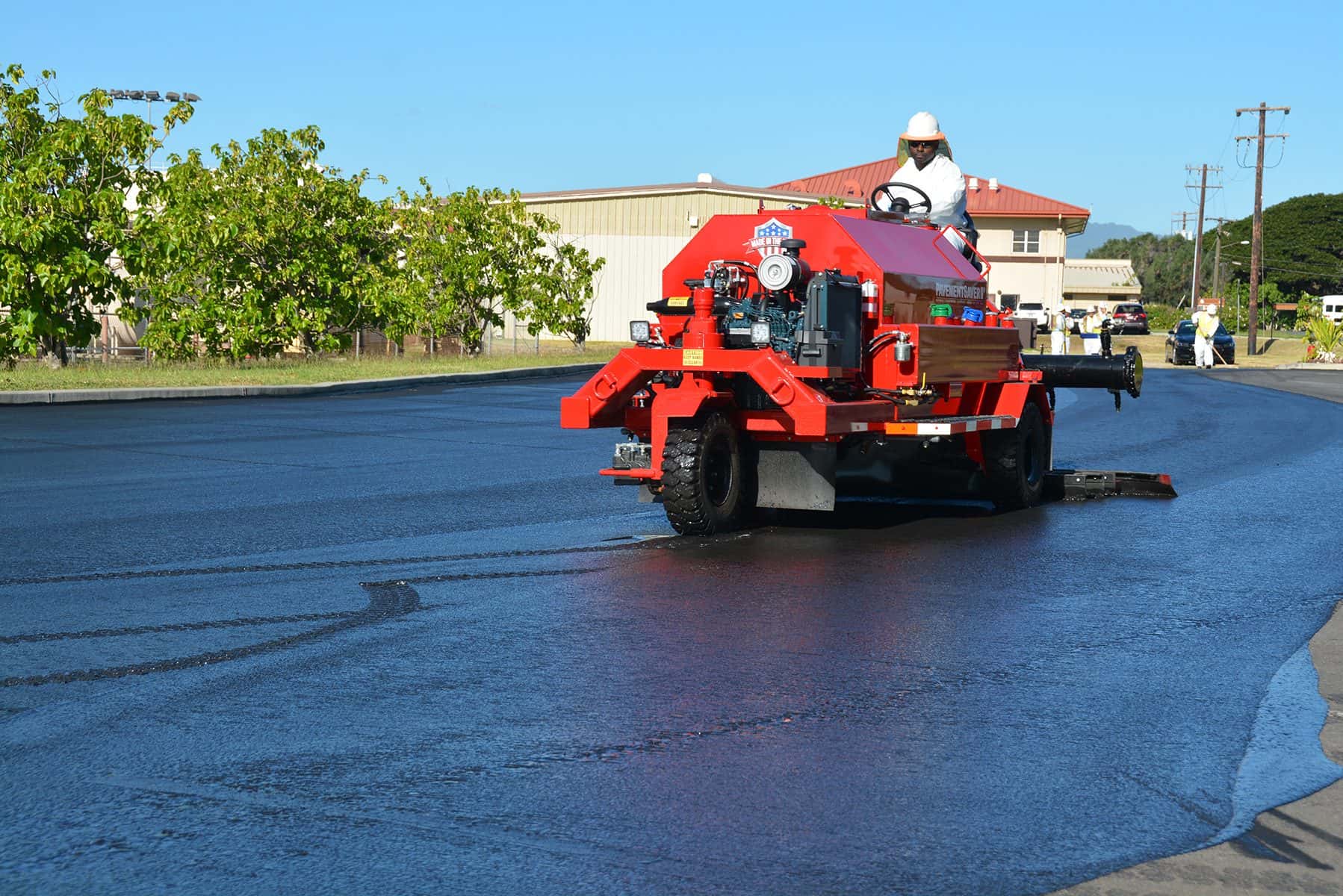
A ride-on sealcoat machine applies sealer across a large lot.
Photo: NAVFAC / Wikimedia Commons, CC BY 2.0
.jpg)
Prep, application and cure
A sealcoat job runs in this order:
- Walk it with the customer. Mark failed areas for repair or exclusion, and note where cars, deliveries and foot traffic go.
- Clean it. Edge the grass, then blow and sweep off dirt and loose material.
- Treat oil spots the way the product's data sheet says.
- Fill the cracks first. The crack filling guide covers how.
- Mix exactly as the data sheet says. No extra water to stretch a batch.
- Apply it. USGS describes sealcoat as sprayed or painted on. By hand, that means squeegees and brushes. A spray rig adds a tank, agitator, pump and hose. Start with the method your product allows and your cash covers (B100.4).
- Keep traffic off until the label says the coat is ready.
Weather and cure limits come from the label and data sheet of the product in your bucket: air and pavement temperature, rain in the forecast, and dry time between coats and before traffic. Check the National Weather Service forecast for the job site the day before and that morning, and reschedule if it won't meet the label. Put your weather terms on every estimate (B100.8).
Traffic control, safety and the handoff
Lots stay in use while you work. Before the job, agree in writing on who moves the cars, which sections close when, where deliveries go, and who decides the lot can open. Close each section with cones, barricades and tape, and give tenants notice ahead of time.
The Occupational Safety and Health Administration (OSHA) sets rules for employers. Three you'll meet first:
- Chemicals. Employers must keep labels and SDSs for the products workers handle, and train workers to handle them.
- Gear. When other controls fall short, employers must provide personal protective equipment (PPE) and train each worker on it. The SDS says what the product calls for.
- Heat. OSHA encourages water, rest and shade. In their first few days in the heat, new workers should get shorter shifts and frequent breaks. Washington, Minnesota, California, Oregon and Colorado have their own heat laws.
Sealer covers the lines. The U.S. Access Board's guide treats resealing a lot as an alteration, and the U.S. Department of Justice says a business that restripes must provide accessible spaces as the 2010 Americans with Disabilities Act (ADA) Standards require. Measure and photograph the layout before you seal. Then restripe it yourself or bring in a striper (see the line striping guide).
Season, training and first jobs
The label's weather limits set your season. Where winter stops the work, plan for it in spring: snow and ice work, savings, or both (B100.8). Crack work fits the cooler months on either side. FHWA's manual puts crack sealing in spring or fall, when it's moderately cool.
Learn on someone else's lot first. Work beside an experienced sealcoater, or ask your supplier what hands-on training it offers. Then do three paid jobs with hand tools or rented equipment before you buy a rig (B100.3). You can do them on Saturdays while you keep your paycheck (B100.1).
Licensing depends on your state, county and city, says the U.S. Small Business Administration. California, for example, puts protective coatings on parking facilities under its C-32 classification. Get insurance in place before the first paid job (B100.7).
Example. Luis (example) keeps his warehouse job and seals driveways on Saturdays by hand. A neighbor asks him to reseal a driveway he did last year. It still looks good, so he tells her it can wait and when to check it again. She sends him two of her neighbors instead. He reports every dollar, cash included, as the IRS requires (B100.1).
Your Move
Do this week
- Ask your state environmental agency and your city whether coal-tar sealer is restricted where you'll work.
- Pick one product. Get its technical data sheet and SDS, and read the prep, weather and cure sections.
- Ask an experienced sealcoater if you can work two jobs beside them, or ask your supplier about training.
- List 25 driveway and small-lot prospects (B100.3).
Log it: I picked my sealer and read its data sheet.
Frequently asked questions
How do I start a sealcoating business?
Learn prep and application beside an experienced operator, pick one product, and finish three paid jobs with hand tools or rented equipment. Then budget, register, license and insure the business (B100.4 to B100.7).
How much does it cost to start a sealcoating business?
It depends on your size and method, and equipment is only part of it. Build the full budget from three quotes per item (B100.4).
Can I sealcoat with a squeegee instead of a spray rig?
Yes. Sealer goes on by spray or by hand, and you can start driveways by hand where the product's instructions allow it (B100.3).
Is coal-tar sealer banned?
In some places. Minnesota and Maine ban its sale and use, Washington bars selling it and applying it to driveways and parking areas, Virginia bans high-PAH sealers, and some cities have their own bans. Check with your state and city before you buy.
What temperature do you need to sealcoat?
Whatever your product's label and data sheet say for air and pavement temperature, along with their rain and cure limits. Limits differ by product.
Watch out for
- Sealing over failed pavement to win the job.
- Watering down sealer to stretch a batch.
- Opening a section before the label says it's ready, or before the owner agrees.
- Buying coal-tar sealer for a job where it's banned.
- Sealing a lot with no plan to put the lines and accessible spaces back.
Free help
- USGS: Coal-tar-based pavement sealcoat, PAHs, and environmental health
- Minnesota Pollution Control Agency: Alternatives for coal tar sealants
- National Weather Service: forecasts, radar and alerts by city or ZIP code
- OSHA On-Site Consultation: no-cost, confidential safety help for smaller businesses
- Small Business Development Centers: no-cost business consulting
Related guides
This is general education, not tax, legal, investment or insurance advice. Rules change and every situation is different. Check the sources below, and talk to a qualified professional before you act on it.
Sources
- USGS: Coal-tar-based pavement sealcoat, PAHs, and environmental health; Fact Sheet 2011-3010
- Minnesota Pollution Control Agency: Alternatives for coal tar sealants
- Washington State Legislature: Chapter 70A.440 RCW, stormwater pollution: coal tar
- Maine Legislature: 38 M.R.S. §419-E, coal tar sealants
- Code of Virginia: § 62.1-196.1, high-PAH sealants
- FHWA: Guidance on highway preservation and maintenance; Materials and procedures for sealing and filling cracks in asphalt-surfaced pavements: manual of practice (FHWA-RD-99-147)
- Federal Trade Commission: Buyer's remorse: the FTC's Cooling-Off Rule may help
- OSHA: Hazard communication; Personal protective equipment; Heat
- U.S. Access Board: Guide to the ADA Standards, chapter 5: parking spaces
- U.S. Department of Justice, ADA.gov: ADA compliance brief: restriping parking spaces
- National Weather Service: weather.gov
- U.S. Small Business Administration: Launch your business
- California Contractors State License Board: C-32 Parking and Highway Improvement Contractor
- IRS: Filing tips and updates for gig economy workers