
Lesson B100.4 · Business 100: Start Right
Startup costs: build a real budget
6-minute read · Figures checked October 2026
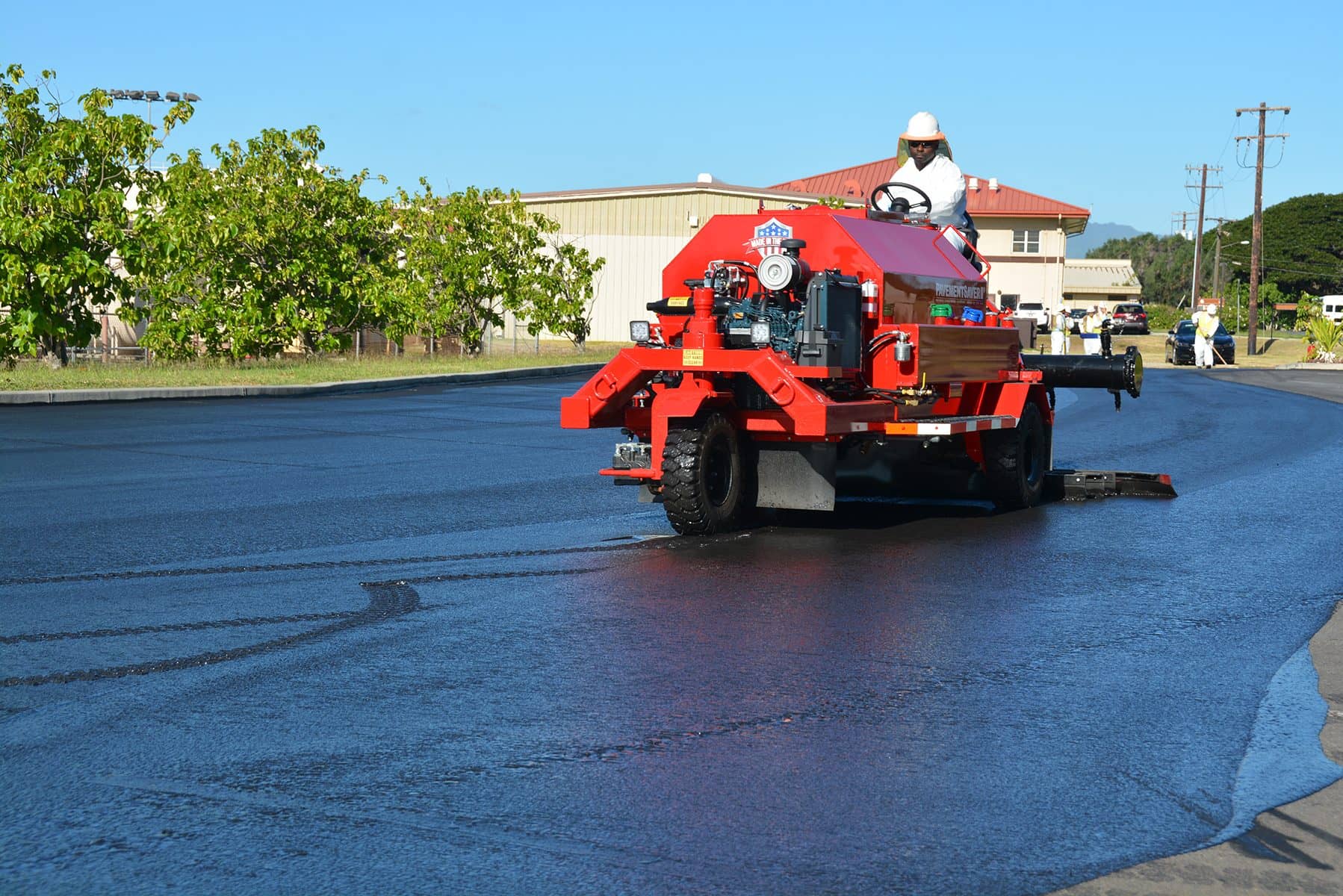
Photo: NAVFAC / Wikimedia Commons, CC BY 2.0
.jpg)
The short answer
There's no single number, because it depends on your service line and how big you start. Equipment is only part of it. A real startup budget also covers the truck and trailer, insurance, licenses, materials for the first jobs, marketing, three months of operating cash and a 10% contingency. One public seller lists skid-mounted sealcoating spray systems from about $4,500 to about $18,200 (October 2026), so start at the size your paid jobs have proved and get three quotes for every big item.
What goes in the budget
| Category | What to include | Where your number comes from |
|---|---|---|
| Equipment | The machines for your one service line | Three written quotes: new, used and rental |
| Truck and trailer | Payload and towing ratings that fit a full load, plus hitch, brakes, tires and registration | Your truck's weight-rating label, a mechanic, quotes |
| Small tools and safety gear | Squeegees, brushes, blower, cones, signs, gloves, eye protection, fire extinguisher | Supplier quotes |
| Materials for first jobs | Enough for the jobs you've booked, not a full season | Your supplier, using the coverage on the product's data sheet |
| Insurance | First payments on liability and commercial auto | Two quotes with the same limits (lesson B100.7) |
| Licenses, registration, permits | State and local filings | Your state and city (lesson B100.6) |
| Marketing | Truck lettering or magnets, yard signs, cards, a simple website | Quotes |
| Software and phone | Estimating, invoicing, bookkeeping and a business line, set up | Monthly plans you've picked |
| Working capital | Three months of operating costs, plus owner pay if you're full time | Your own monthly budget |
| Contingency | 10% of the one-time costs | Math |
Working capital is the cash that pays the bills while you wait: for the rain to stop, for the phone to ring, for the customer who pays in 45 days.
What equipment lists for
| Equipment | Public seller list prices, checked October 11, 2026 |
|---|---|
| Sealcoating spray systems, skid-mounted | About $4,500 to about $18,200 (Asphalt Kingdom: AK130 $4,479; AirBoss 750 Platinum $18,199) |
| Sealcoating starter business package (sprayer, melter, blower, materials) | Starting at about $12,900 (Asphalt Kingdom Start Me Up Business Package, $12,856) |
| Hot-pour crack melter, smaller unit | About $1,900 (Asphalt Kingdom RY10 PRO, $1,899 as listed in that package) |
| Walk-behind airless line striper | About $2,900 to about $6,800 (NewStripe 4250, $2,876 on sale and listed sold out, at Morley Athletic; Graco LineLazer 3400, $6,842, at PaintSupply.com) |
| Brine sprayer, 100-gallon skid | About $3,900 (Kings KS100, $3,932.25, at Sprayer Depot) |
| Brine maker | About $10,500 to about $40,000 (VSI Genesis Brine Buddy $10,523; VSI Legacy $40,000; at Russo Power) |
These are what public sellers listed the equipment for on October 11, 2026. Prices change, so check them again before you buy. They aren't what a contractor charges for work, and they leave out freight, sales tax, the truck and the trailer. Larger crack-sealing kettles for commercial volume cost more. For sidewalk snow machines, pressure washing and anything not listed, get three quotes.
New, used or rented:
- Rent anything you'll use only a few days a season. You pay only when you use it, and upkeep is the rental shop's job. Book early in peak season.
- Buy used to save cash up front. Check the hours, pump, agitator, burner and hoses, ask for maintenance records, and make sure you can still get parts. Pay a mechanic to look before you pay the seller.
- Buy new for the warranty and dealer support, if your proven demand and your cash both support it.
For three quotes to compare, they need the same specs (tank size, pump, hose length, warranty), in writing, with freight, tax and delivery date.
Three sizes of start
| Side work | Solo full-time | Small crew | |
|---|---|---|---|
| Equipment | Hand tools; rent or borrow machines | One setup for your main service line, often used | A bigger setup, maybe a second line |
| Truck and trailer | The truck you have, if its ratings fit the load | A dependable truck; trailer as needed | Two vehicles and trailers |
| Insurance | Liability at least; check your auto policy | Liability and commercial auto | Add workers' comp once you hire |
| Working capital | Materials for booked jobs | Three months of costs plus owner pay | Three months, including payroll |
Swipe the table sideways to see every column.
Example: Tomas's solo budget
Tomas, 38, has finished his three paid jobs and wants to go full time with sealcoating and crack repair. He already owns a pickup. Made-up numbers, not a price guide.
| Item | Cost |
|---|---|
| Used sealcoating setup (best of three quotes) | $12,000 |
| Hot-pour crack melter, smaller unit | $2,000 |
| Used trailer | $3,000 |
| Truck tires, brakes and hitch work | $1,500 |
| Small tools and safety gear | $1,500 |
| Materials for his first booked jobs | $2,500 |
| Insurance first payments, registration, licenses and permits | $1,900 |
| Marketing | $800 |
| Software and phone setup | $300 |
| One-time costs | $25,500 |
| Contingency, 10% of one-time costs | $2,550 |
| Working capital: 3 months × $4,200 (business bills $1,200 plus the $3,000 his household budget needs) | $12,600 |
| Cash needed to start | $40,650 |
The equipment Tomas pictured when he started, the sealcoating setup and the melter, is $14,000. That's about a third of the cash he needs. Working capital and contingency together come to $15,150, more than the equipment. Without them, the first rainy stretch or a dead pump in July goes on a credit card.
Two paths: buy a sealcoating setup or start by hand and rent
Two ways to go
Buy a sealcoating setup now, or start with hand tools and rent the machines?
Conservative path
Start by hand and rent
Squeegees, brushes and a blower for the first jobs, and a rental for anything you'll use only a few days a season.
- Cash
- Small tools, safety gear and rental fees, with no machine to buy.
- Risk
- Rentals can be booked up in peak season, and hand work limits how much you can finish in a day.
- Time
- Slower on each job, but you can start as soon as jobs are booked.
- What goes wrong
- You turn down work a machine could have handled, or the rental isn't there the week you need it.
Bolder path
Buy a sealcoating setup now
Own the machine for your main service line, new or used, from the best of three written quotes.
- Cash
- Usually the biggest line in the budget. Skid-mounted spray systems list from about $4,500 to about $18,200 at one public seller (October 2026), and used costs less up front.
- Risk
- If the demand isn't there yet, the machine sits. A used unit can hide pump, agitator or hose problems, which a mechanic's look before you pay can catch.
- Time
- Faster jobs once it's running. Getting three comparable quotes takes time first.
- What goes wrong
- The purchase eats the working capital, and the first rainy stretch or a dead pump in July goes on a credit card.
When each fits
Starting by hand and renting fits side work and a first season, while paid jobs are still proving the demand (B100.3). Buying fits once paid jobs prove the demand for that machine, the three quotes match on specs, and your budget still holds three months of working capital and the 10% contingency after the purchase.
Your Move
Do this week
- Pick your size: side work, solo full-time or small crew. List every category from the first table for your one service line.
- Get three written quotes for each big item: new, used and rental where they exist.
- Add three months of operating costs, plus owner pay if you'll be full time, and a 10% contingency on the one-time costs.
- Run the Startup cash tool, or add it up on paper, and compare the total with the cash you have.
Log it: I built my startup budget.
Common questions
How much does it cost to start a sealcoating business?
It depends on your size and service line. Skid-mounted sealcoating spray systems list from about $4,500 to about $18,200 at one public seller (October 2026), and equipment is only part of the budget. In the example, it was about a third of the cash needed.
Should I buy new or used equipment?
Used costs less up front but needs an inspection and parts you can still get. New comes with a warranty and costs more. Renting fits anything you'll use only a few days a season: you pay only when you use it.
How much working capital do I need to start?
Plan on three months of operating costs, plus owner pay if you're full time. Add a 10% contingency on your one-time costs.
Watch out for
- Treating a package price as a whole budget. It doesn't include the truck, trailer, insurance or working capital.
- A truck that's fine empty and overloaded full. Check the payload and towing ratings against a full tank, and see lesson B100.6 for when weight ratings bring a USDOT number or a CDL.
- Spending the working capital on a bigger rig.
- A financing offer stapled to the equipment quote. Read lesson B100.5 before you sign anything.
Free help
- SBA: Calculate your startup costs, with a fillable worksheet and a break-even calculator
- Small Business Development Centers: free help checking a budget
- SCORE: free mentoring
Free practice
Lesson check
5 questions on this lesson, one at a time, with the answer and the reason after each. Pass with 4 right, including every must-know question.
This is general education, not tax, legal, investment or insurance advice. Rules change and every situation is different. Check the sources below, and talk to a qualified professional before you act on it.
Sources
- Asphalt Kingdom: Skid-mounted sealcoat sprayers; Start Me Up Business Package (checked October 11, 2026)
- Morley Athletic: NewStripe 4250 airless walk-behind striping machine (checked October 11, 2026)
- PaintSupply.com: Graco LineLazer 3400 gas airless line striper (checked October 11, 2026)
- Sprayer Depot: Kings 100-gallon salt brine skid sprayer (checked October 11, 2026)
- Russo Power: VSI Genesis Brine Buddy; VSI Legacy brine maker (checked October 11, 2026)
- SBA: Calculate your startup costs